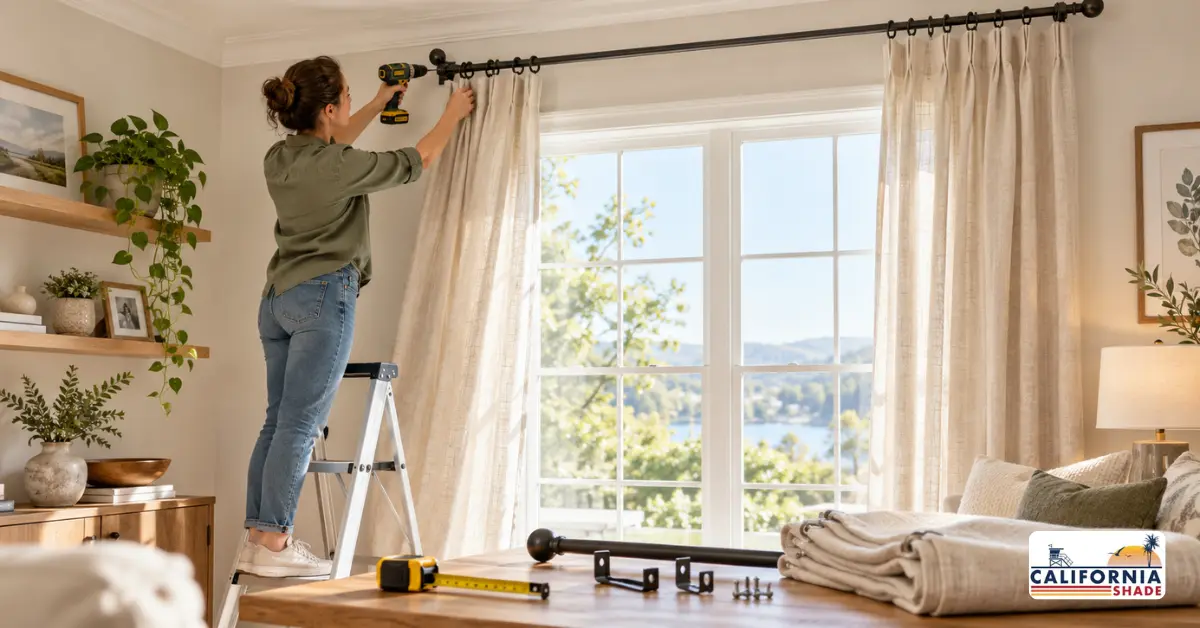
Learning how to install drapes starts with your window measurements, not your rod. Once you know the width and height you need, the rest of the job is mounting brackets, anchoring them to your wall, and hanging the panel.
Below is the full process, along with the parts of the job that trip up most homeowners.
TL;DR
- Learning how to install drapes means measuring your window, choosing the right rod, anchoring it to your specific wall type, and hanging the panels by style.
- Orange County homes often mix drywall with stucco trim, so the wrong wall anchor is a common DIY mistake near windows.
- A rod set too low or brackets that aren’t level are the top reasons a DIY drape job looks off.
- California Shade installs drapes and all major window treatments across Orange County and offers a free in-home consultation at (714) 502-5501.
What Tools and Materials Do You Need?
A basic drape installation needs a drill, a level, a tape measure, a pencil, and a screwdriver. A stud finder helps too, especially in older Orange County homes where wall framing isn’t always where you expect it.
For materials, you need the curtain rod, brackets, screws, wall anchors that match your wall type, and the drape panels themselves. California Shade stocks drapery hardware sized for standard OC window widths.
| Category | Items |
| Tools | Drill, level, tape measure, pencil, screwdriver, stud finder |
| Materials | Curtain rod, brackets, screws, wall anchors, drape panels, finials |
How Do You Choose the Right Curtain Rod?
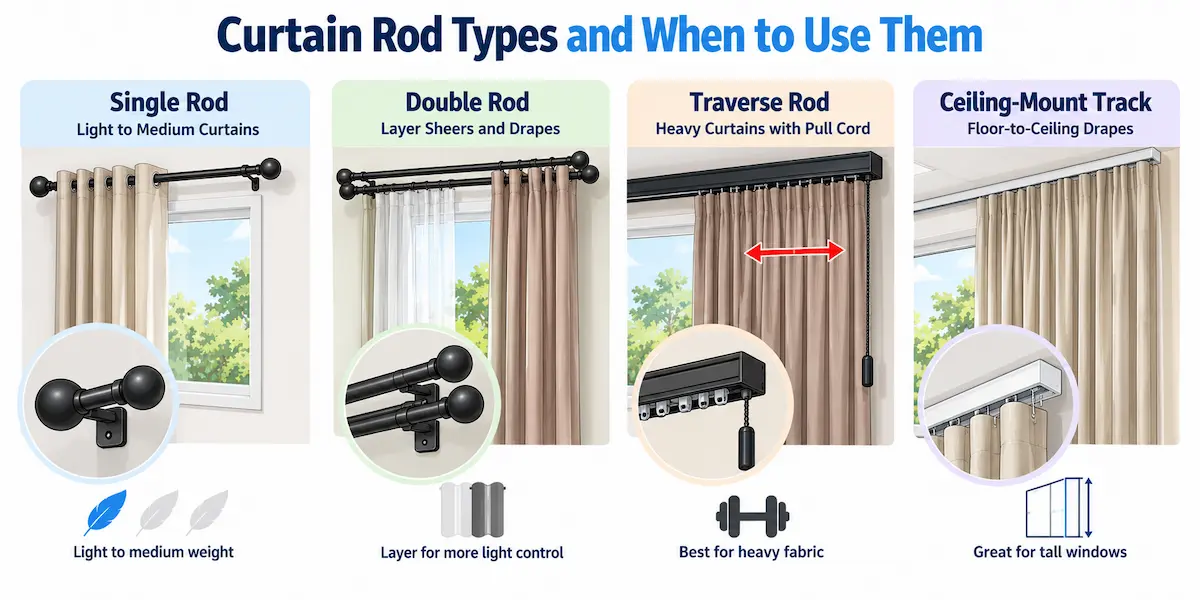
Your rod choice depends on the weight of your drapes and how many layers you want to hang. A standard single rod works for most lightweight to medium panels. A double rod lets you layer sheers behind heavier drapes, which is common in Orange County living rooms that face busy streets and want extra light control.
Traverse rods use a pull cord. They suit heavy fabric you open and close daily. Ceiling-mount track systems skip the wall bracket. They work well for floor-to-ceiling drapes in newer Orange County homes with tall windows.
How High Should You Mount a Curtain Rod?
Mount the rod four to six inches above the window frame, or closer to the ceiling if you want the room to feel taller. Extend the rod six to fifteen inches past the frame on each side so the panels can fully clear the glass when open.
This spacing matters more than most homeowners think. A rod mounted too close to the frame makes a window look smaller, and panels that can’t clear the glass block natural light even when open. Measure both sides from the same reference point so your bracket heights match.
How Do You Mark and Level Your Bracket Placement?
Hold your rod at the height you measured and mark both bracket points with a pencil. Use a level across both marks before you drill anything. A crooked rod is the single most common mistake in DIY drape installation, and it usually comes from skipping this step.
What Wall Anchors Do You Need for Your Wall Type?
Your wall type decides which anchor you need, and the wrong choice is the top reason brackets pull loose. Drywall needs plastic or toggle anchors rated for the drape weight. Plaster needs a pilot hole and a screw sized to bite into the harder surface. Brick or concrete needs masonry anchors and a hammer drill.
Many Orange County homes have stucco exteriors with drywall interiors, but window trim sometimes hides a denser backing board. If your drill meets resistance, stop and check the material before forcing a screw through it.
| Wall Type | Anchor Needed |
| Drywall | Plastic or toggle anchor, weight-rated |
| Plaster | Pilot hole, hardened screw |
| Brick or concrete | Masonry anchor, hammer drill |
| Stucco trim | Masonry-rated anchor, check backing first |
Heavy drapes need more than a light-duty anchor. A thick blackout panel or a double layer of fabric can weigh several pounds per foot, and a standard drywall anchor isn’t built for that load.
Falls from ladders during home projects like this are common enough that the CDC’s National Institute for Occupational Safety and Health tracks them as a real risk, noting that many ladder injuries happen at home rather than on a job site. A short, stable step stool and a second set of hands make bracket installation safer than balancing on a chair.
How Do You Install the Brackets?
Drill your pilot holes at the marked, leveled points. Insert your wall anchors if your wall type calls for them. Line up each bracket over its holes and drive the screws until the bracket sits snug against the wall. Tug on each bracket once it is in place to confirm it holds firm before you hang anything on it.
How Do You Hang Drapes by Curtain Style?
The way you load your rod depends on your panel’s header style.
Rod pocket panels slide directly onto the rod through a sewn-in sleeve. Grommet panels have metal rings sewn into the top, so you thread the rod straight through them. Tab-top panels use fabric loops, also threaded onto the rod. Pinch-pleat and ring-top panels attach with drapery pins clipped to curtain rings that slide along the rod.
Slide your panel onto the rod before you lift it onto the brackets. Add your finials last so the rod can’t slide through the bracket while you work.
How Do You Set the Rod and Finish the Installation?
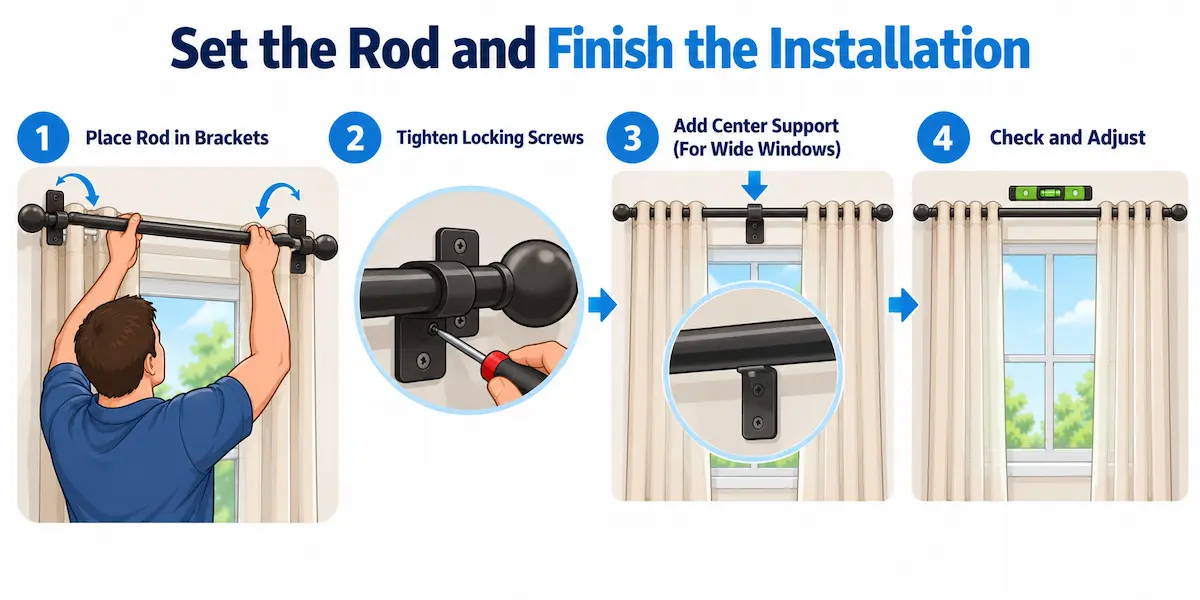
Lift the loaded rod and rest it in the brackets, then tighten any locking screws included with your hardware. For a wide window, add a center support bracket underneath the rod’s midpoint. This keeps a heavy or wide span of fabric from sagging in the middle over time, which is a problem standard end brackets alone can’t prevent.
Step back and check that the rod sits level and the panels hang evenly. Adjust the folds by hand until the fabric falls naturally.
Can You Install Drapes Without Drilling?
Yes, with two main options. A tension rod wedges inside the window frame using spring pressure and works for lightweight curtains only. Adhesive-mount brackets stick to the wall and hold light to medium panels, but they aren’t rated for heavy fabric or daily pull-cord use. Both options suit renters or anyone who wants a temporary setup.
Need help choosing or installing your drapes? Our drapes service can help with measuring, selecting the right mounting option, and installation.
Common Drape Installation Mistakes and How to Fix Them
Most drape installation problems trace back to five fixable errors.
| Mistake | Fix |
| Rod hangs crooked | Re-mark both bracket points with a level before redrilling |
| Fabric sags in the middle | Add a center support bracket |
| Panels don’t clear the glass | Extend the rod further past the frame |
| Bracket pulls out of the wall | Match the anchor to your wall type and drape weight |
| Rod sits too low | Remount four to six inches above the frame |
DIY vs. Professional: Who Should Install Drapes in Orange County?
A DIY install can work for a single lightweight panel on a standard drywall wall. The job gets harder with wide windows, heavy fabric, stucco trim, or ceiling-mount track systems, where one wrong anchor means redoing the whole bracket.
California Shade installs drapes as part of its full line of window treatments across Orange County, and the install team already knows which anchor a given wall type in your neighborhood needs. If you are still weighing your options before you buy, the custom drapes pricing guide breaks down what different fabrics and rod systems typically cost.
FAQ
How High Should Curtain Rods Be Hung Above the Window?
Aim for four to six inches above the frame, or go higher if you want the room to look taller. Extend the rod six to fifteen inches past the frame on each side.
How Much Weight Can a Curtain Rod Hold?
Rod material and anchor type set the weight limit together. A standard drywall anchor holds light to medium panels, while steel rods with toggle anchors or masonry anchors handle heavier fabric.
Do I Need Two Brackets for a Wide Window?
Yes, and wide spans over about six feet also need a center support bracket to stop the rod from sagging in the middle.
Can I Install Curtain Rods Without Drilling?
Yes. Tension rods and adhesive-mount brackets both work without drilling, though they only suit lightweight curtains.
Ready to Skip the Guesswork?
Now you know how to install drapes from start to finish, including the wall-anchor step most guides skip. If you would rather have it done right the first time, California Shade offers a free in-home consultation for Orange County homeowners. Call (714) 502-5501 to book yours.