Knowing how to install security screens starts with understanding what they protect: your windows and doors from forced entry, while air still moves through your home. A security screen is a permanently mounted barrier. Manufacturers build them from stainless steel mesh, aluminum, or polycarbonate panel material. Homeowners in Orange County, CA can put in basic kit screens themselves, but custom, structural security screens usually call for a professional team like California Shade.
This guide walks through the full process for both window and door security screens. It also covers the tools you’ll need, the mistakes that trip up first-time installers, and the fire code rules that apply to permanently mounted screens in California.
TL;DR
- Security screens protect windows and doors from forced entry while still letting air move through your home.
- Window screens mount directly into the frame. Door screens need hinges, a header, and a locking system.
- DIY installation works for basic kit screens. Custom, structural security screens need a professional installer like California Shade.
- Permanently mounted security screens over bedroom windows must include a quick-release latch for fire egress.
- California Shade installs security screens across Orange County, CA, and offers a free in-home consultation to start the process.
What Types of Security Screens Fit Your Home?
Security screens come in two main forms: window screens and door screens, and each one mounts differently. Window screens fit into the existing window frame and stay in place with structural fasteners. Door screens hinge like a regular door and include a header piece, a bottom expander, and a full locking mechanism.
The material you choose changes how the screen holds up over time. Stainless steel mesh resists cutting and prying, which makes it a strong pick for ground-floor entry points. Perforated aluminum panels offer a lighter weight option with a cleaner look for patio doors. Polycarbonate panels add impact resistance against storms, a real advantage near the Orange County coast, where salt air and wind both wear down hardware fast. California Shade fits all three material types across its Orange County service area.
| Type | Best For | Mounting Method |
| Window security screen | Ground-floor windows, sliding windows | Frame-mounted with structural screws |
| Hinged security screen door | Front doors, patio doors | Hinged frame with header and expander |
| Fixed security screen | Side windows, less-used openings | Permanently fastened to the opening |
Should You DIY or Call a Professional Installer?
Kit-based security screens on a standard-size window work fine as a DIY project for a confident homeowner. Custom-fit screens with structural fasteners and tamper-resistant hardware call for a professional installer. California Shade fits custom security screens for Orange County homes and handles the structural fastening, the egress hardware, and the final fit check on every job.
Ask yourself these questions before you pick up a drill:
- Do you own a drill, a level, and a set of masonry or metal bits?
- Is your window or door a standard size, or does it need a custom-fit screen?
- Will you install the screen alone, or do you have a second person to help with a door panel?
- Does the opening sit over a bedroom, where fire egress rules apply?
A single small window screen is a project you can finish in a weekend. A full-home security screen package, especially one that includes doors, works better with a professional install team from your area, one that already knows Orange County’s local code.
Tools and Materials You Need
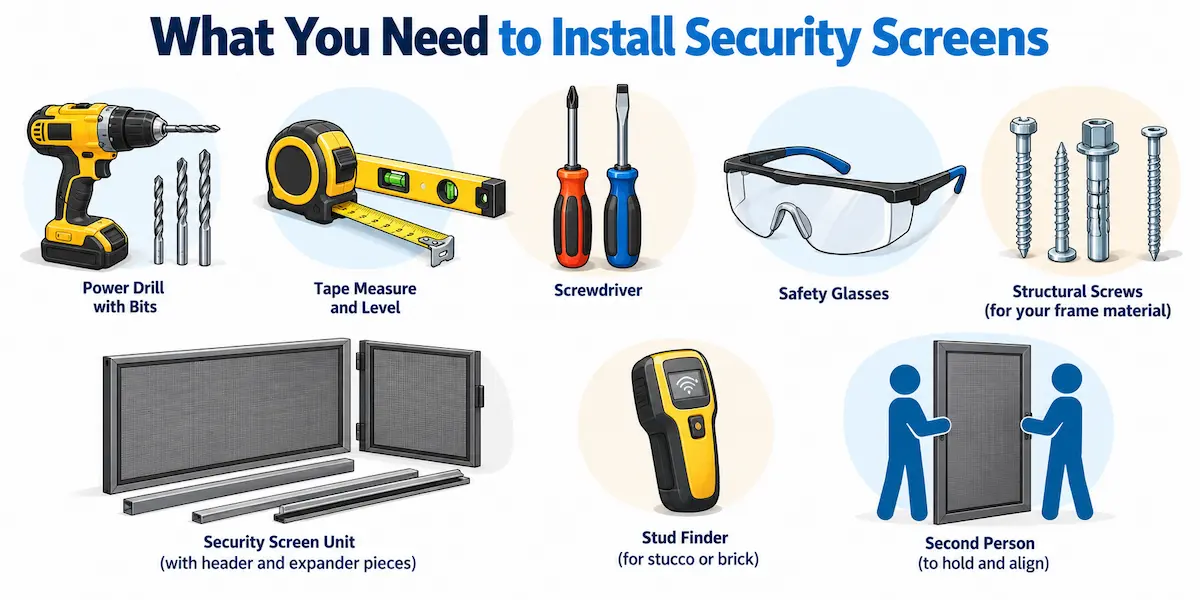
Gather these items before you start:
- Power drill with pilot-hole bits
- Tape measure and a level
- Screwdriver
- Safety glasses
- Structural screws sized for your frame material
- The security screen unit, including header and expander pieces for doors
- A second person to help hold and align door panels
Add a stud finder if your window frame sits over stucco or brick veneer, since many Orange County homes need masonry bits for exterior mounting. Skipping the pilot holes is the single biggest reason DIY installers strip fasteners or crack a frame. Drill every hole before you drive a screw. California Shade’s install crews carry every one of these tools on every Orange County visit, so you don’t have to buy anything you’ll only use once.
How to Install Security Screens: Step-by-Step
Installing a Window Security Screen
- Measure the window opening at the top, middle, and bottom to catch any variance in the frame.
- Confirm your mesh or panel material matches the exposure the window gets. Coastal salt air favors stainless steel.
- Position the frame in the opening and check it sits square on all sides.
- Mark and drill pilot holes through the frame into the window casing.
- Drive the structural screws and check the fit stays flush.
- Test the hinge and latch if the screen includes an egress release for emergency exit.
Installing a Security Screen Door
- Measure the door frame and header opening before you order the panel.
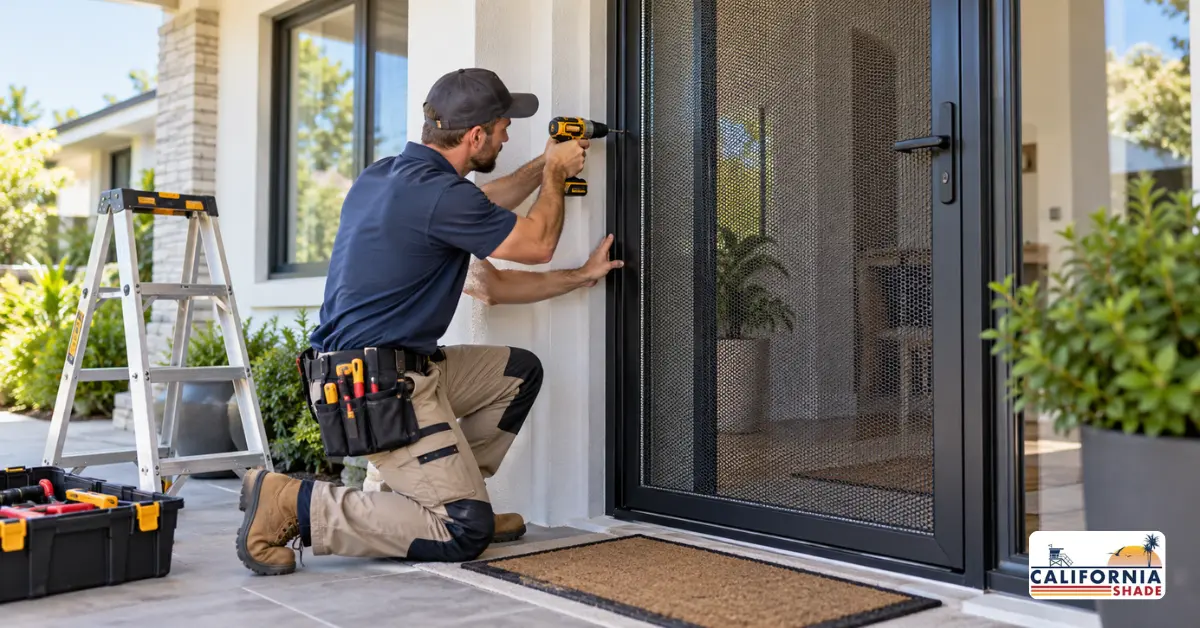
- Assemble the door first: attach the handle, lock support plates, and hinges per the manufacturer’s instructions.
- Hold the door in the frame with a helper and drill pilot holes through the hinge points.
- Mount the hinges and check that the door swings evenly.
- Install the header piece above the frame and the bottom expander to block gaps.
- Fit the locking mechanism, then test the deadbolt and latch together.
- Open and close the door several times to confirm smooth operation before you call the job done.
California Shade’s Orange County crews follow this same sequence on every install, with a final walk-through to confirm fit before they leave your home.
Fire Egress and Local Code Requirements
California law says every bedroom window needs a clear exit path. A security screen can’t block that path. Permanently mounted screens over a bedroom window must include a quick-release latch so the window still works as an emergency exit.
Always confirm the release mechanism opens from inside without a key or tool. Never install a fixed screen over a window that serves as a bedroom’s only fire exit. Check with your city’s building department in Orange County before a permanent install, since permit rules shift by municipality. California Shade builds egress compliance into every security screen it installs, so you don’t have to research code by yourself.
Common Mistakes to Avoid When Installing Security Screens
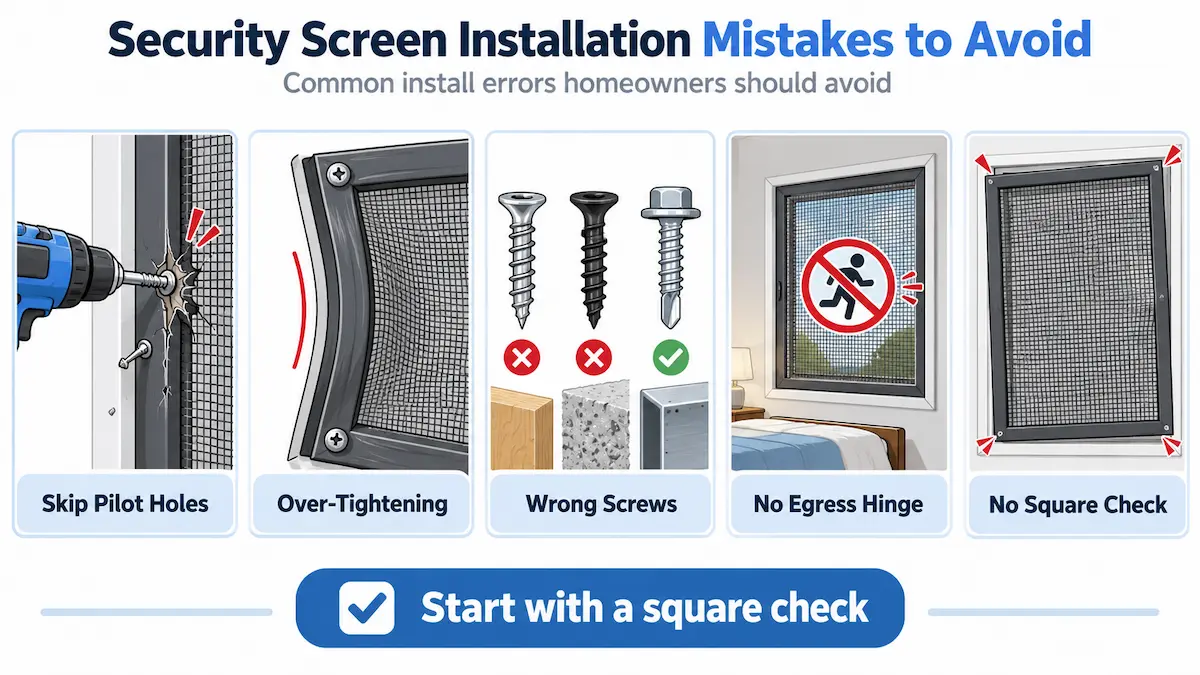
- Skipping pilot holes: this cracks frames and strips fasteners. Drill first, every time.
- Over-tightening the hardware: this warps aluminum frames and pulls mesh out of square.
- Using the wrong screw type: standard wood screws back out of metal or stucco. Match the screw to the frame material.
- Ignoring the egress hinge: a fixed screen over a bedroom window creates a real safety hazard.
- Skipping the square check: an out-of-square frame binds the hinge and lets gaps form at the corners.
Orange County homeowners run into these same five mistakes most often, according to California Shade’s install team, which is why every service call starts with a square check before any screw goes in.
Maintaining Your Security Screens After Installation
Clean the mesh and frame with mild soap and water twice a year to clear salt residue common near the Orange County coast. Check every screw for tightness once a season, since vibration from door use loosens hardware over time. Inspect the mesh for corrosion or bent wires, especially on ground-floor windows that take daily wear. California Shade offers a maintenance check as part of its Orange County service plans, so your screens stay tight for years.
Security Screens in Orange County, CA
Orange County homes face two conditions that test security screen hardware: coastal salt air and strong sun exposure. Salt air speeds up corrosion on standard aluminum fasteners, which is why California Shade installs stainless steel hardware on coastal properties. UV exposure also breaks down lower-grade mesh coatings faster in Southern California than it does in milder climates.
FBI crime data shows more than half of U.S. burglaries involve forcible entry, most often through a door or window. That makes reinforced entry points a real deterrent, not just a convenience upgrade. A properly installed security screen adds a physical barrier at exactly the point burglars target first, and California Shade fits them across every Orange County neighborhood.
Frequently Asked Questions
How Long Does Security Screen Installation Take?
A single window screen installs in under an hour once the frame is prepped. A full door installation with locking hardware typically takes two to three hours for a first-time DIY installer, or under an hour for a trained California Shade crew.
Can I Install Security Screens on Any Window or Door?
Most standard windows and doors accept a security screen, but odd-sized or curved openings need a custom-fit panel. California Shade measures each Orange County opening on-site to confirm fit before ordering.
Do Security Screens Need a Permit?
Permit rules depend on your city. Some Orange County municipalities require a permit for permanently mounted security screens over bedroom windows because of fire egress rules. Check with your local building department first.
What’s the Difference Between a Security Screen and a Regular Window Screen?
A regular window screen keeps insects out and comes off easily. A security screen stays permanently mounted, uses stainless steel mesh or impact-resistant panel material, and resists cutting or prying.
How Much Does Professional Security Screen Installation Cost?
Cost depends on the number of openings, the material, and whether the job includes doors. See our security screen cost guide for current Orange County price ranges.
How to Install Security Screens the Right Way
DIY works for a single standard window. A full-home security package, especially one with doors and egress hardware, calls for a professional crew that knows Orange County code inside and out. California Shade installs security screens across Orange County, CA, alongside its full line of outdoor shades. Call (714) 502-5501 to book a free in-home consultation and get your home secured the right way.